Spas are under pressure to deliver visible results while controlling treatment time, training demands, and equipment costs. This is where multifunctional skincare platforms become valuable. But why are multi functional skin care platforms better for spas? The answer involves more than having several handpieces in one cabinet. A well-designed platform can support cleansing, exfoliation, hydration, infusion, and calming protocols within one organized workflow.
Dr. Michael H. Gold, a respected aesthetic physician, has said, “Combination treatments can address multiple skin concerns more efficiently when each step is carefully selected.” This principle matters in a busy treatment room. One client may need congested-pore care, while another wants hydration before an event. A flexible platform helps therapists adjust the session without moving between bulky machines. That can mean fewer cables, less setup time, and a cleaner client experience.
The benefits also reach business planning. Spas can train teams around one system, create tiered treatment menus, and reduce equipment duplication. Clients may notice the practical details: warmer towels, shorter waiting periods, and a therapist who explains each step confidently. Still, multifunctionality is not automatically better. Too many features may confuse staff or encourage unnecessary treatments. I think that is the part worth questioning. A platform should support sound skin assessment, not replace it. When reliable technology meets skilled hands, spas can build safer, more consistent, and more adaptable services. These seven tips explore how that balance can improve operations, client trust, and long-term treatment value.
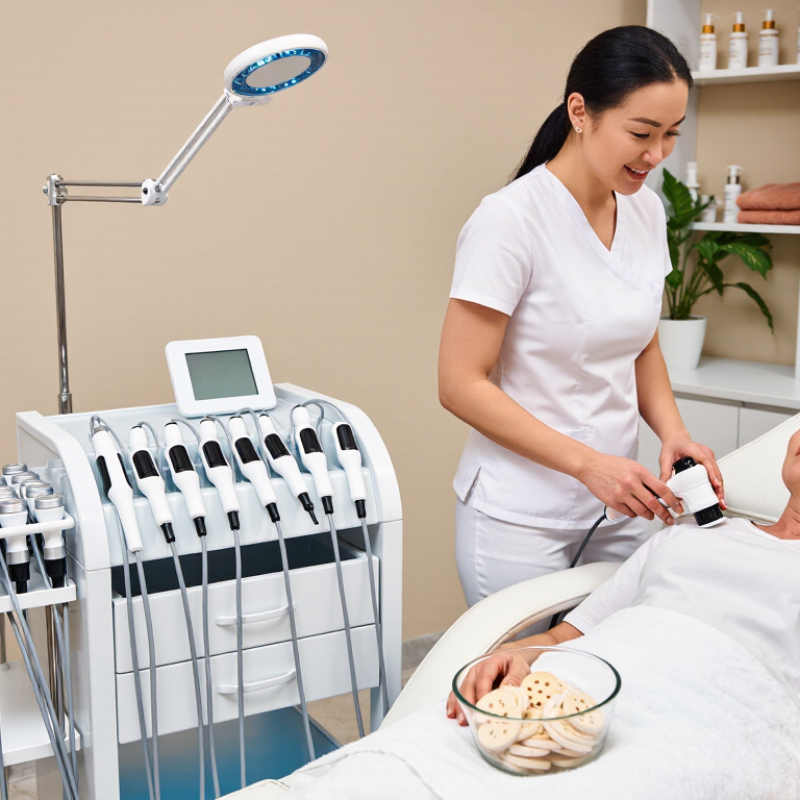
A multifunctional skincare platform is one professional system supporting several treatment functions. These may include cleansing, exfoliation, hydration, infusion, light therapy, and skin analysis. Instead of moving clients between separate machines, therapists can build one coordinated protocol. The platform usually combines adjustable energy levels, interchangeable handpieces, treatment timers, and digital client records. Its value depends on safe operation, realistic claims, and consistent training.
The commercial case is credible. The International Spa Association reported that United States spa revenue reached approximately $21.1 billion in 2023, with about 192 million visits. That volume increases pressure to deliver efficient, repeatable services. The Global Wellness Institute valued the global wellness economy at $6.3 trillion in 2023. Spas therefore need flexible systems, not only attractive equipment. A single platform can reduce room changes, simplify staff training, and support personalized treatment plans.
Seven practical benefits follow: faster consultations, broader service menus, better room utilization, easier protocol standardization, clearer client education, stronger retail conversations, and improved follow-up tracking.
Still, multifunctionality is not automatically superior. Too many settings can confuse new therapists. Some platforms also encourage rushed treatment design. Clinics should review clinical evidence, maintenance costs, contraindications, and staff competency before purchase. That caution matters. A well-used platform should make the client’s experience feel calmer, not more complicated.
7 Tips Why Multifunctional Skincare Platforms Help Spas?
Assess Spa Demand Across 26,025 U.S. Locations (ISPA, 2023)
The 2023 ISPA industry data identified 26,025 spa locations across the United States. That scale signals a crowded, varied market. A multifunctional skincare platform can help one treatment room serve several client needs. It may support cleansing, exfoliation, infusion, hydration, and calming protocols. Seven practical advantages stand out: broader service menus, better room utilization, simpler staff training, controlled product use, clearer consultation pathways, easier seasonal adjustments, and more consistent treatment records. Small operational gains matter. A ten-minute setup reduction can improve daily scheduling.
Demand is also shaped by wider wellness spending. The Global Wellness Institute reported a $5.6 trillion global wellness economy in 2022, published in its 2023 monitor. Skincare fits this wider movement toward prevention, appearance, and self-care. Spa operators should still assess local evidence. Review booking patterns, repeat visits, consultation notes, and treatment cancellations before purchasing equipment. National data creates context, not certainty. A coastal resort and a suburban medical spa may need completely different functions.
From hands-on treatment planning, the strongest platform is not always the most complex one. It should offer adjustable intensity, clear safety guidance, and documented contraindications. Staff need practice with sensitive skin, uneven texture, and post-treatment discomfort. They also need permission to decline unsuitable procedures. That human judgment remains essential. One weakness deserves attention: combining too many functions can encourage rushed protocols. More features do not automatically create better care. Spa owners should compare training hours, maintenance requirements, consumable costs, and measurable client outcomes before expanding the menu.
Assess Spa Demand Across 26,025 U.S. Locations — ISPA, 2023
The 2023 U.S. spa industry included approximately 26,025 locations, 192.7 million visits, and $21.3 billion in revenue. On average, each location represented about 7,406 annual visits and $818,444 in annual revenue. Multifunctional skincare platforms can help spas manage treatment planning, client records, product recommendations, scheduling, and follow-up communication in one workflow.
Source: International Spa Association (ISPA), 2023 U.S. Spa Industry Study. Per-location figures are calculated from reported industry totals.
Improve Capacity Across 184 Million U.S. Spa Visits (ISPA, 2023)
In 2023, ISPA reported 184 million spa visits across the United States. That demand puts pressure on rooms, schedules, and trained staff. In busy treatment rooms, a multifunctional skincare platform can reduce unnecessary equipment changes.
Tip one: expand treatment options without crowding each room with separate devices.
Tip two: switch between cleansing, infusion, exfoliation, and soothing modes efficiently.
Tip three: reduce setup time between appointments. Small gains matter.
Tip four: support consistent protocols when trained staff follow documented settings. Tip five: improve capacity by shortening transitions, not by rushing clients. A clean trolley, labeled attachments, and clear intake notes can keep rooms moving safely. Tip six: make staff coaching easier through one familiar control system. In practice, this may help a spa serve more guests during peak hours. However, capacity is not only a numbers game.
Tip seven: use treatment records and client feedback to refine scheduling and care plans. Providers should verify contraindications, maintain equipment, and explain each step clearly.
More functions can also create confusion. That is a real weakness. A platform should support professional judgment, not replace it. With 184 million visits shaping the market, dependable workflow becomes valuable. Each spa should still measure results locally, because a promising setup may underperform with poorly trained staff.
A multifunctional skincare platform can turn scattered spa routines into one clear working system. Standardized intake forms help therapists record allergies, sensitivities, medications, and recent procedures before treatment. This creates a safer starting point. Every client should receive a documented skin assessment, not a quick visual guess. Small details matter, such as redness around the nose or discomfort during cleansing.
Shared treatment protocols also improve staff training. New therapists can follow visual steps for cleansing, exfoliation, device settings, product contact time, and aftercare. Experienced professionals can review these steps during supervised practice. Equipment checks should be recorded before each session. Cables, handpieces, and cooling functions need attention. Simple logs support accountability. They also make maintenance easier to verify.
Personalization should remain central. A platform can offer structured pathways for dry, oily, sensitive, or uneven-looking skin, while allowing qualified professionals to adjust the plan. Client feedback should guide every adjustment. If warmth, stinging, or unusual redness appears, the session should pause for reassessment. Never ignore discomfort. Local regulations and professional scope must guide device use, sanitation, consent, and referral decisions. No protocol is perfect. A rushed checklist can still fail. Monthly reviews can reveal repeated errors, unclear instructions, or training gaps. These findings help spas improve safety without losing the human judgment that personalized care requires.
The U.S. spa market reached $21.3 billion in 2023, according to ISPA. That scale creates opportunity, but revenue alone does not prove profitable growth. Multifunctional skincare platforms can connect treatment records, product use, staff time, and client outcomes in one workflow. This makes ROI easier to inspect.
Tip 1: Track revenue per treatment hour, not just total sales. Tip 2: Compare repeat visits before and after platform adoption. Tip 3: Record product consumption beside each service. Small details matter. A facial may earn more, yet consume extra labor and supplies. I have seen teams overlook this gap when reviewing monthly reports.
Tip 4: Measure consultation-to-booking conversion. Tip 5: Separate new-client revenue from returning-client revenue. Tip 6: Review cancellation patterns by service type. Tip 7: Use client feedback with measurable outcomes, such as hydration scores or reduced irritation reports. These indicators require consistent staff training. Results can also vary with season, location, and practitioner experience. No dashboard is perfect. Managers should question unusual increases, check data quality, and adjust targets quarterly. A platform that saves ten minutes per appointment may appear modest, but across a busy spa, those minutes can become additional bookable capacity.
| # | Tip | Why a Multifunctional Platform Helps | Primary KPI to Track | Industry Context or Calculation | ROI Measurement Formula |
|---|---|---|---|---|---|
| 1 | Increase Revenue per Visit | Combining multiple skincare functions in one treatment workflow can help staff standardize add-on services and personalize treatment plans without requiring a separate process for every modality. | Average revenue per visit | $57.10 is the approximate 2023 U.S. spa revenue per visit, calculated from $21.3 billion in revenue divided by 373 million visits. | (Current revenue per visit − Previous revenue per visit) × Visit volume |
| 2 | Improve Treatment Room Utilization | A single platform that supports several treatment steps may reduce setup changes and make it easier to schedule compatible services within the same room. | Room utilization rate | Track booked treatment-room hours against available operating hours. This is an internal operating metric and should be measured before and after implementation. | Booked room hours ÷ Available room hours × 100 |
| 3 | Reduce Service Preparation Time | Fewer device changes, product transfers, and manual preparation steps can create more consistent appointment turnover and reduce non-treatment time. | Setup minutes per appointment | Measure preparation and sanitation time separately from treatment time. Use time studies across a representative sample of appointments rather than relying on estimates. | Minutes saved × Loaded labor cost per minute × Appointment volume |
| 4 | Support Consistent Service Delivery | Standardized settings, protocols, and documentation can help reduce variation between providers and make staff training easier to monitor. | Protocol compliance rate | Record whether required consultation, consent, treatment, and aftercare steps are completed for each eligible appointment. | Completed required steps ÷ Total eligible appointments × 100 |
| 5 | Increase Repeat-Visit Potential | Integrated consultation notes and treatment histories can help providers recommend consistent follow-up care based on client needs and previous services. | Rebooking rate | Calculate the percentage of clients who schedule another eligible appointment within a defined period, such as 30 or 60 days. | Clients who rebook within the period ÷ Eligible completed-service clients × 100 |
| 6 | Improve Capacity Planning | When one platform supports several service combinations, spas can compare demand, appointment duration, consumables, and provider availability in one operational view. | Revenue per operating hour | The 2023 U.S. spa market generated approximately $21.3 billion across approximately 22,000 spa locations, equal to about $968,000 per location as a simple market-average calculation. | Treatment revenue ÷ Total treatment-room operating hours |
| 7 | Calculate Payback and Total ROI | A multifunctional platform should be evaluated using incremental revenue, labor efficiency, consumable costs, training costs, maintenance, and utilization—not equipment price alone. | Payback period and net ROI | The U.S. spa industry reported approximately 369,000 employees in 2023, or about 16.8 employees per location using the market-average calculation. Labor efficiency should therefore be measured at the spa level. | Net ROI = (Incremental gross profit − Total platform costs) ÷ Total platform costs × 100 Payback period = Total platform costs ÷ Monthly incremental gross profit |
It is one professional system supporting several skincare functions. These may include cleansing, exfoliation, hydration, infusion, light therapy, and skin analysis. One room. Several treatment options. Its value depends on safe operation and realistic claims.
Therapists can complete coordinated protocols without changing machines or rooms. A ten-minute setup reduction may create another bookable appointment. Small gains add up. However, faster scheduling should not shorten essential consultation time.
Common functions include cleansing, exfoliation, hydration, infusion, calming care, and skin analysis. Some systems use adjustable intensity levels and interchangeable handpieces. The exact menu varies by equipment. More functions do not automatically mean better care.
Therapists can adjust intensity, product use, and treatment steps for different skin needs. Digital records may store consultation notes and previous responses. A client with sensitive skin may need gentler settings. Personalization still requires human judgment.
Staff should understand settings, contraindications, hygiene, handpiece use, and post-treatment guidance. They need practice with sensitive skin and uneven texture. They also need permission to decline unsuitable procedures. Training cannot be replaced by a colorful control screen.
Track revenue per treatment hour, product consumption, labor time, and repeat visits. Also review consultation-to-booking conversion and cancellation patterns. Compare results before and after adoption. Revenue alone can hide extra costs.
Records should include treatment settings, products used, client feedback, and follow-up observations. Possible measures include hydration scores or irritation reports. Consistent records make unusual results easier to question. No dashboard is perfect.
Review evidence, maintenance costs, consumable expenses, staff competency, and documented contraindications. Too many settings may confuse new therapists. Rushed protocols can make the client experience feel complicated. The most advanced system may not be the most suitable.
Multifunctional skincare platforms combine several professional treatment capabilities in one coordinated system, helping spas deliver facial care, cleansing, exfoliation, hydration, and targeted skin support more efficiently. Why are multi functional skin care platforms better for spas? They can reduce equipment duplication, improve room utilization, and help staff create consistent treatment protocols for different client needs. This flexibility is especially valuable when serving diverse customers across the 26,025 U.S. spa locations reported by ISPA in 2023.
These platforms may also help spas manage demand across 184 million annual U.S. spa visits by improving scheduling efficiency and treatment capacity. With standardized safety procedures, structured training, and personalized protocols, teams can provide more reliable experiences while maintaining professional quality. In the $21.3 billion U.S. spa market, owners can evaluate their return on investment through service variety, repeat bookings, staff productivity, and reduced operational complexity. Overall, a multifunctional platform supports scalable growth while helping spas deliver organized, adaptable, and client-focused skincare services.

EssSea Beauty