An overheating beauty machine is more than an irritating technical problem. It can signal blocked airflow, a failing fan, damaged wiring, excessive workload, or poor maintenance. Before searching for how to fix a beauty machine that is overheating, stop the treatment and disconnect the power safely. Do not touch a hot handpiece or open the casing immediately. Let the equipment cool on a clear, dry surface.
Dr. Michael H. Gold, a dermatologist and aesthetic-device specialist, offers a practical warning: “When a device behaves unusually, stop using it and investigate before treating another patient.” That advice matters in busy salons and clinics. A warm cable may be manageable. A burning smell, clicking sound, error code, or softened plastic is not. Check the ventilation openings for dust, towels, or product residue. Confirm that the cooling fan operates normally. Review the duty cycle in the manufacturer’s manual, because repeated treatments can exceed the machine’s limits.
Record what happened. Note the treatment duration, room temperature, settings, and warning messages. This small log can help an authorized technician identify the cause. Do not bypass a thermal sensor or replace a fuse with a stronger one. That shortcut may hide a serious electrical fault. Sometimes cleaning the filter solves the problem. Sometimes it does not. This is where honest judgment matters. If overheating returns after cooling and basic inspection, remove the device from service and contact the manufacturer or a qualified repair professional. Never guess with equipment used on human skin.
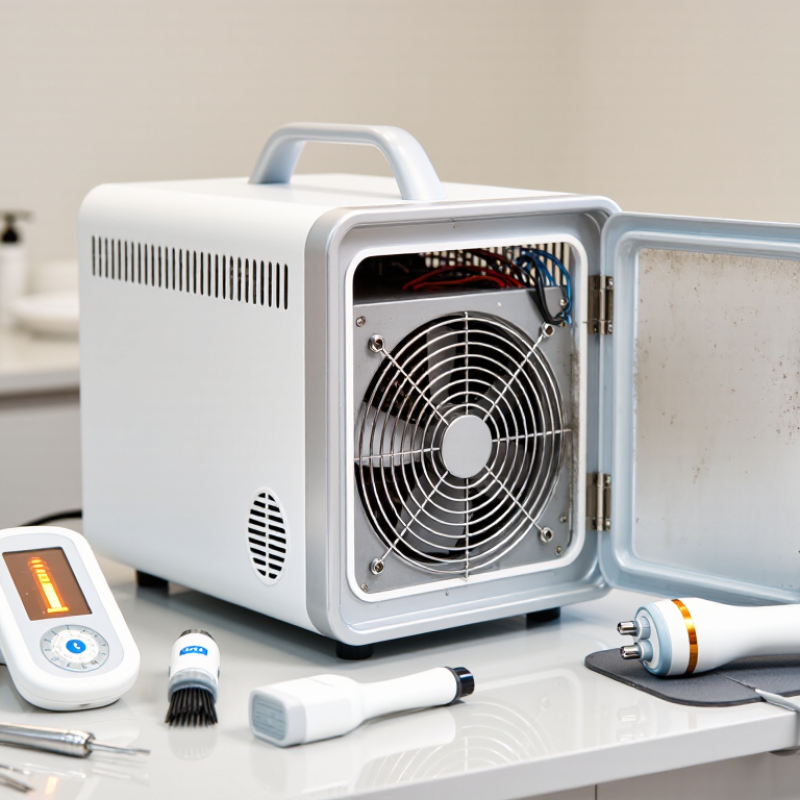
How to Fix a Beauty Machine That Is Overheating?
Identify the Causes of Beauty Machine Overheating
Overheating usually begins with restricted airflow, excessive treatment time, or unstable electrical contact. Dust can cover vents like a thin blanket. A clogged filter then forces the internal fan to work harder. The housing may feel unusually hot, while the treatment head loses power or shuts down.
Electrical resistance is another warning sign. Loose plugs, damaged cords, and overloaded sockets can produce heat before visible damage appears. The U.S. Fire Administration reported an average of 24,200 residential electrical-malfunction fires annually from 2014 to 2018. This figure does not describe beauty equipment specifically, but it shows why electrical heat deserves immediate attention. IEC 60601-1 also emphasizes temperature control and protection against abnormal operating conditions in medical electrical equipment. Beauty devices with similar energy systems need the same cautious mindset.
Tips: Switch off the machine and unplug it before inspection. Let it cool completely. Clean vents with a dry, soft brush, and keep at least 10 centimeters of clearance around them. Check whether the fan starts smoothly. Do not continue using a unit with a burning smell, melted plastic, repeated shutdowns, or a swollen battery. A qualified technician should test internal components, thermal sensors, and power connections. User manuals often provide useful limits, but they can be vague. I would not guess. Record the room temperature, session length, and shutdown time; these details help reveal whether the cause is poor ventilation, overload, or a failing component.
Identify the Causes of Beauty Machine Overheating
This diagnostic-priority chart ranks common overheating causes from 1 to 5 based on their typical impact on heat dissipation and ease of inspection. Start with blocked air vents, dirty filters, and fan problems before checking sensors, power components, or internal thermal interfaces. Always disconnect power and follow the equipment service manual before opening the machine.
How to Fix a Beauty Machine That Is Overheating?
Follow Essential Safety Steps Before Troubleshooting
Stop using the beauty machine immediately when its housing feels unusually hot. Turn it off and unplug it from the wall. Do not touch exposed metal parts with wet hands. Move the device away from towels, oils, curtains, and other flammable materials. Let it cool on a hard, dry surface for at least thirty minutes.
Check for warning signs before investigating further. Look for a melted plug, darkened cable, cracked casing, unusual smells, or repeated power interruptions. A faint plastic odor is not something to ignore. Never spray water into vents or open the casing while power remains connected. If the unit contains a battery, do not puncture, squeeze, or place it near heat.
Read the manufacturer’s safety instructions and confirm that the power supply matches the required voltage. Clean blocked air openings only after the machine is fully cool and disconnected. A soft, dry brush can remove visible dust. Do not bypass temperature controls or continue testing a device that overheats within minutes. In my experience, people often blame the fan first, but a damaged cable or restricted airflow may be responsible. I have also underestimated dust buildup before. That mistake can become expensive.
If burning smells, smoke, sparks, swelling, or skin burns appear, stop immediately and keep others away. Arrange an inspection by a qualified service professional. Record when the overheating begins, the operating setting, and any warning message. These details can help identify the fault without unsafe trial and error.
An overheating beauty machine needs a controlled inspection, not repeated switching. Stop treatment immediately, disconnect the power, and let the unit cool on a clear surface. Do not cover vents or continue testing a hot handpiece. Check the wall outlet, plug, cable, and power adapter for discoloration, looseness, or a burnt smell. An overloaded extension lead can also create heat. Use the voltage and fuse requirements listed in the service manual. Never replace a fuse with a higher-rated one.
Remove dust from external vents with a soft, dry brush. A blocked filter can restrict airflow within minutes. Inspect the fan for unusual noise, vibration, or slow movement. If airflow feels weak, stop using the machine rather than forcing another cycle. Liquid cooling systems need correct fluid levels and clear tubing. Leaks, cloudy fluid, or trapped air require professional service. Do not open sealed cooling assemblies yourself.
Look for loose connectors, darkened circuit areas, melted insulation, or swollen capacitors. Thermal sensors may also fail and trigger inaccurate temperature readings.
My own mistake was treating a warm casing as harmless; the internal temperature was higher than expected.
A qualified technician should test resistance, sensors, and control boards with suitable instruments. Keep a record of operating time, error codes, and room temperature. Small details often reveal the real fault.
How to Fix a Beauty Machine That Is Overheating?
An overheating beauty machine often has blocked vents or damaged internal parts. Unplug it and let the housing cool completely before inspection. Dust, skin flakes, and product residue can collect around the intake grille. Use a soft, dry brush to loosen debris. Then wipe the vent openings with a lint-free cloth. Do not push dirt deeper inside. A quick wipe is not always enough. I once underestimated a thin dust layer, and the machine still overheated after cleaning.
Check whether the cooling fan spins smoothly and quietly. A rattling sound may indicate a worn bearing or loose component. Look for melted plastic, dark marks, cracked insulation, or a burning smell. Stop using the machine if you notice these signs. Damaged fans, power cords, thermal sensors, and connectors should be replaced with compatible parts by a qualified technician. Do not bypass a thermal safety device. That shortcut can create a serious hazard and hide the original fault.
Tips: Keep vents several centimeters away from walls and towels. Clean them weekly in busy treatment rooms. Test the machine for a few minutes after servicing. Watch the temperature, airflow, and unusual noises. If overheating returns, the problem may be deeper than blocked vents. Record when it happens. That detail can help a technician find the cause faster.
| Inspection Area | Common Signs | Safe Checks | Recommended Action | Replace or Service When | Priority |
|---|---|---|---|---|---|
| Air intake and exhaust vents | The housing becomes unusually hot, airflow is weak, or the cooling fan runs continuously. | Switch off and unplug the machine. Inspect all vents for dust, lint, hair, towels, or nearby objects blocking airflow. | Remove loose debris with a soft brush or vacuum using low suction. Keep clearance around every vent during operation. | A vent grille is cracked, melted, permanently blocked, or cannot be cleaned without opening the enclosure. | High |
| Cooling fan | No fan noise, intermittent operation, grinding sounds, or a noticeable reduction in airflow. | After unplugging, check whether the fan blades are obstructed. Do not touch moving parts or test with the cover removed unless qualified. | Clear external obstructions. Have a qualified technician test the fan, wiring, and control circuit. | The fan fails to start, vibrates, has damaged blades, overheats, or makes persistent bearing noise. | High |
| Dust filter or mesh screen | Visible dust buildup, reduced airflow, longer cooling time, or repeated thermal shutdowns. | Confirm that the filter is installed correctly and is not saturated with dust or product residue. | Clean a reusable filter according to the equipment instructions and allow it to dry completely before refitting. | The filter is torn, deformed, permanently clogged, or no longer fits securely. | Medium |
| Power cord, plug, and connector | A hot plug, discoloration, burning odor, flickering power, or unexpected shutdowns. | Unplug immediately and inspect the outer insulation, plug body, and connector for cuts, looseness, melting, or scorch marks. | Stop using the machine. Do not tape, splice, or bend a damaged cord. Arrange inspection by a qualified service professional. | Any conductor is exposed, the plug or connector is burnt, or the cord becomes hot during normal use. | Critical |
| Heating element or internal thermal module | The treatment head is hotter than expected, heating is uneven, or the machine produces a burning smell. | Turn off and unplug the machine. Allow it to cool fully. Do not open the enclosure or touch the heating element. | Remove the machine from service and request professional electrical and thermal testing. | The element is visibly damaged, the temperature control is unstable, or overheating continues after vents are cleaned. | Critical |
| Temperature sensor and thermal cutout | The display shows inconsistent readings, the machine shuts down too early, or it fails to shut down when excessively hot. | Record error codes and operating symptoms. Do not bypass alarms, fuses, or thermal protection. | Arrange diagnostic testing by a qualified technician using suitable calibrated test equipment. | The sensor is loose or damaged, the thermal cutout has operated repeatedly, or readings cannot be verified. | High |
| Internal wiring and circuit board | Random restarts, error messages, a burnt-electronics odor, or heat concentrated near the control panel. | Disconnect power and check only for external signs such as smoke, melted plastic, or discoloration. | Do not operate the machine. Refer it to an appropriately qualified service professional. | Any component is charred, swollen, cracked, loose, or shows evidence of arcing or liquid damage. | Critical |
| Operating environment and placement | Overheating occurs in a small, enclosed, dusty, humid, or unusually warm room. | Check whether the machine is placed against a wall, under fabric, near a heater, or in direct sunlight. | Move it to a clean, dry, well-ventilated, stable surface and follow the clearance requirements in the user manual. | The room conditions remain outside the equipment's specified operating range or moisture has entered the machine. | Medium |
| Workload and cooling intervals | The machine overheats only after repeated treatments or extended operation. | Review the session duration, treatment intensity, and number of consecutive cycles against the operating instructions. | Use the specified settings, avoid covering the machine, and allow the recommended cooling period between sessions. | Overheating occurs during normal use after cleaning and proper placement, indicating a possible internal fault. | Medium |
When a beauty machine overheats, stop treatment immediately and disconnect power. Do not restart it while the housing feels unusually hot. The NFPA report Electrical Fires estimates about 32,000 U.S. home fires yearly involved electrical distribution or lighting equipment during 2015–2019. That figure supports a cautious response, even in professional rooms.
Test the machine after it cools completely. Record room temperature, operating time, error codes, and the exact point where heat appears. Inspect air vents, filters, fans, cables, and power sockets for dust, blockage, discoloration, or looseness. Use a calibrated infrared thermometer to compare the inlet, outlet, and treatment head. A qualified technician should measure current draw and check internal thermal protection. Compare every reading with the service manual, not online guesses. My practical mistake was checking only the handpiece; the blocked rear vent caused the real problem.
Prevention needs records. Clean accessible filters on the documented schedule, leave clear space around vents, and follow the stated duty cycle. Never bypass a thermal cutoff. Keep a simple log after each session, including temperature and cooling time. Review repeated warnings before the next client uses the device. IEC 60601-1 addresses temperature limits, insulation, and protection against hazardous equipment conditions for applicable medical electrical devices. However, compliance does not replace maintenance. If the casing smells burnt, changes color, or trips power repeatedly, remove the machine from service and arrange inspection by qualified personnel. Small warning signs are easy to dismiss. That deserves reconsideration.
Stop treatment immediately. Disconnect the power and place the machine on a clear, cool surface. Do not restart it while the housing remains unusually hot. Let it cool completely before inspection.
Check the wall outlet, plug, cable, and adapter. Look for looseness, discoloration, damaged insulation, or a burnt smell. An overloaded extension lead can generate dangerous heat. Follow the manual’s voltage and fuse requirements.
Use only the specified fuse rating. Never install a higher-rated fuse. A stronger fuse may hide a serious electrical fault. Qualified service is safer when fuses fail repeatedly.
Dusty vents and filters restrict airflow quickly. Clean accessible vents with a soft, dry brush. Leave clear space around every vent. Do not cover the machine during operation.
Listen for unusual noise, vibration, or slow fan movement. Weak airflow means the next cycle should not begin. Liquid systems need correct fluid levels and clear tubing. Leaks, cloudy fluid, or trapped air require professional service.
Inspect internal parts only when the machine is unplugged. Look for loose connectors, dark circuit areas, melted insulation, or swollen capacitors. Do not open sealed cooling assemblies. A technician should test sensors and control boards.
Record the room temperature, operating time, error code, and heat location. Use a calibrated infrared thermometer at the inlet, outlet, and treatment head. Compare readings with the service manual. Online guesses may mislead.
Keep a brief log after each session. Include temperature, cooling time, warnings, and unusual sounds. Clean filters according to the documented schedule. Review repeated warnings before another client uses the device.
Stop using it if the casing smells burnt or changes color. Remove it after repeated power trips or temperature warnings. Do not bypass thermal protection. Small warning signs deserve reconsideration.
Learning how to fix a beauty machine that is overheating begins with identifying the possible cause, such as blocked ventilation, excessive operating time, unstable power, a damaged cooling fan, or an internal component fault. Before troubleshooting, switch off and unplug the machine, allow it to cool completely, and follow the equipment’s safety instructions. Never open the unit while it is connected to power or attempt repairs beyond your level of training.
Once safe, inspect the power cord, plug, air vents, fan, filters, and visible internal components for damage, dust, or unusual odors. Clean blocked vents carefully, remove accumulated debris, and replace worn or damaged parts with suitable components. After reassembly, test the machine for a short period while monitoring its temperature, sound, and performance. To prevent future overheating, keep the unit in a well-ventilated area, follow recommended operating intervals, clean it regularly, avoid covering its vents, and arrange professional servicing when persistent problems occur.

EssSea Beauty