How to Explain Skin Analysis Reports to Salon Clients?

Time:2026-10-07 Author:Sophia
0%

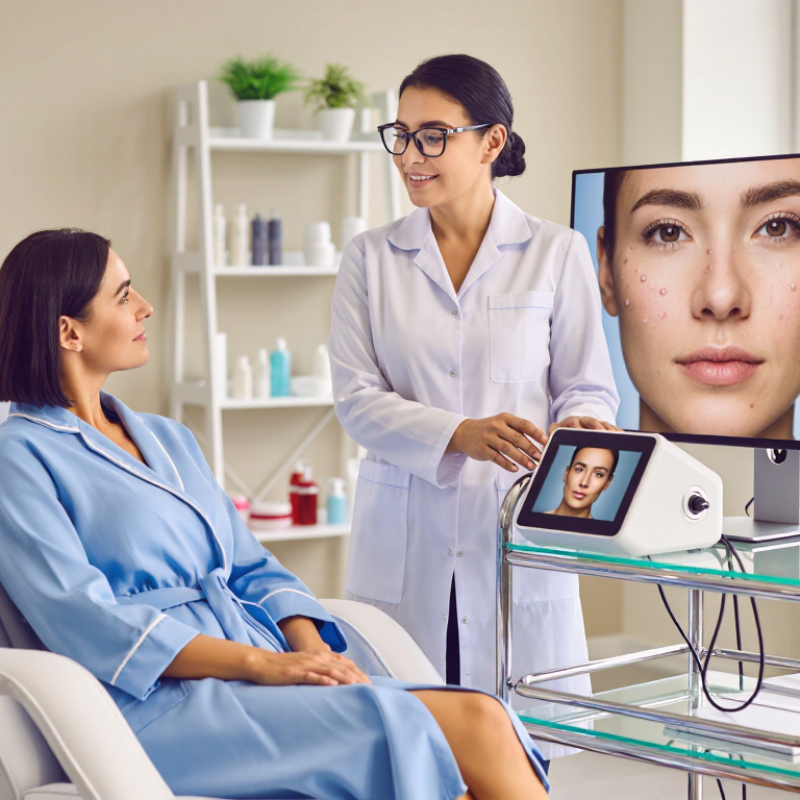
Learning how to explain skin analysis reports to salon clients requires more than reading numbers from a device. It requires professional judgment, clear language, and genuine listening. A client may sit beneath bright magnifying lamps, watching images of enlarged pores, dry patches, or uneven tone. The report can feel personal, even alarming. Your explanation should make the information useful, not frightening.

Dr. Leslie Baumann, a board-certified dermatologist and skincare researcher, offers an important principle: “Skin type is not static; it can change with the seasons, hormones, age, and environment.” This idea helps salon professionals avoid rigid labels. A client’s skin may appear dehydrated after air travel, more sensitive after exfoliation, or oilier during humid weather. Therefore, a single scan should support conversation, not define the client forever. The device provides evidence. Your training provides context.

When considering how to explain skin analysis reports to salon clients, describe each finding in simple, respectful terms. Explain what the image suggests, what it cannot prove, and which habits may influence it. Avoid promising permanent results. Avoid diagnosing medical conditions unless you are legally qualified to do so. Some reports may be inconsistent. Lighting, makeup residue, camera position, and recent skincare can affect accuracy. That matters.

A useful explanation might sound like this: “Your skin shows surface dehydration today, so we can focus on comfort and barrier support.” Then ask about tightness, product use, and lifestyle. The client’s experience may challenge the report. Listen carefully. A polished consultation still needs reflection. Perhaps the reading is incomplete. Perhaps your interpretation needs revision. Reliability grows when honesty leads the conversation.
How to Explain Skin Analysis Reports to Salon Clients?

What a Skin Analysis Report Measures and Why It Matters

How to Explain Skin Analysis Reports to Salon Clients?

A skin analysis report turns a close look into measurable observations. It may record hydration, oil levels, pore visibility, texture, pigmentation, redness, and elasticity. Each measure describes a skin condition, not a personal judgment. For example, low hydration can appear as fine lines around the cheeks. Excess oil may be more visible across the nose and forehead. These details help clients connect numbers with what they see in the mirror.

In salon practice, explain one result at a time. Show the client where the reading appears on the face. A cheek reading may differ from the forehead reading. Ask about tightness after cleansing, midday shine, or stinging during product use. These experiences add context that a device cannot capture. A report can guide a gentle routine, treatment timing, and follow-up checks. It should not diagnose disease or replace medical advice.

Reports have limits. Room temperature, recent exercise, makeup residue, and sensor placement can change results. The reading is a snapshot. Do not promise perfect accuracy. I have seen clients focus on one low score and overlook comfortable, balanced skin. That reaction deserves patience, not pressure. Repeat measurements under similar conditions, record changes, and explain uncertainty honestly. Trust grows when the professional admits what the report cannot prove.

How to Explain a Skin Analysis Report to Salon Clients

A skin analysis report converts observable skin conditions into easy-to-understand indicators. Higher scores represent a more favorable result for each measure.

This example profile shows relatively good hydration and evenness, while pore visibility and redness may benefit from a targeted skincare routine. Scores are illustrative, non-diagnostic, and should be interpreted together with client consultation and professional observation.

How to Translate Technical Skin Data into Clear Client Language

How to Explain Skin Analysis Reports to Salon Clients?

A skin analysis report can feel like a medical document. Clients usually need meaning, not more numbers. Start with one visible concern, such as tight cheeks or an oily forehead. Then connect it to one measurement. For example, “Your cheek hydration reads 38%, so your skin may feel tight after cleansing.” Avoid saying the device has found a disease. Salon analysis supports cosmetic guidance, not medical diagnosis.

Use plain comparisons. “Transepidermal water loss” becomes “water escaping from the skin.” “High sebum” becomes “your forehead is producing extra oil.” If the report shows high redness, say, “This area looks more reactive today.” The word “today” matters. Sleep, temperature, recent exercise, and cleansing can change results. I sometimes explain the numbers too confidently, and that needs correction. One scan is evidence, not a final truth.

Industry data supports careful communication. The Global Wellness Institute’s 2024 Global Wellness Economy Monitor valued personal care and beauty at about 1.2 trillion dollars in 2023. Clients are increasingly exposed to technical beauty claims, but technical language can reduce trust. The American Academy of Dermatology recommends broad-spectrum SPF 30 or higher, giving professionals a clear example of measurable advice. Link every result to a simple action: use gentler cleansing, apply moisturizer to damp skin, or seek dermatological advice when changes persist. Leave room for questions. Five minutes can reveal more than another scan.

How to Explain Skin Analysis Reports to Salon Clients?

How to Translate Technical Skin Data into Clear Client Language

Technical Measurement Example Result General Reference Report Status What It Means in Simple Language Recommended Salon Guidance
Skin Hydration 42% moisture level Many facial skin analyzers classify approximately 40–60% as a balanced range; device scales may differ. Balanced “Your skin has a healthy amount of water at the moment.” Maintain a gentle cleanser, hydrating serum, and moisturizer. Avoid excessive hot water and over-cleansing.
Transepidermal Water Loss (TEWL) 14 g/m²/h Adult facial TEWL commonly varies by site and conditions; values around 10–15 g/m²/h are often considered relatively low to moderate. Well Retained “Your skin barrier is holding on to moisture reasonably well.” Continue barrier-supportive products containing moisturizers and avoid unnecessary exfoliation.
Sebum Level 58 µg/cm² Sebum readings depend on the measurement area, cleansing routine, and time since washing; the T-zone is normally oilier. Moderate “You have some natural oil, especially in areas such as the forehead, nose, and chin.” Use a non-stripping cleanser and lightweight moisturizer. Do not remove all oil, because over-drying may increase discomfort.
Surface pH 5.3 Healthy adult skin commonly has a mildly acidic surface pH, often approximately 4.5–5.5. Within Typical Range “Your skin’s natural surface acidity is in a supportive range for its protective barrier.” Choose mild, fragrance-free cleansers and avoid frequent use of harsh alkaline soaps.
Erythema or Redness Index 0.62 relative index Redness scores are device-specific and should be compared with the same person’s previous readings. Mild Redness “There is a small amount of visible redness, which may be related to sensitivity, heat, friction, or recent products.” Use calming, fragrance-free care. Reduce scrubbing and monitor whether redness persists or becomes uncomfortable.
Pigmentation Contrast 18% contrast variation Contrast indicates how much darker or lighter selected areas appear compared with surrounding skin; it is not a medical diagnosis. Uneven Tone “Some areas appear darker than the surrounding skin, so your overall tone looks slightly uneven.” Recommend daily broad-spectrum sunscreen and gentle brightening care. Set realistic expectations because pigmentation changes gradually.
Pore Visibility Moderate; mainly in the T-zone Pore appearance is influenced by oil, follicle size, genetics, age, and lighting; pores cannot be permanently erased. Moderate “Your pores are more noticeable in oilier areas, but their appearance can be softened.” Use non-comedogenic products and gentle exfoliation only as tolerated. Avoid squeezing or aggressive extraction.
Skin Elasticity 78% relative score Elasticity scores depend on the instrument, skin site, age, hydration, and measurement pressure. Good Support “Your skin is showing a good level of bounce and flexibility today.” Protect this result with daily sunscreen, adequate moisturization, and a consistent skincare routine.
Fine-Line Visibility Low to moderate around the eyes Fine lines may look more visible when skin is dry, facial expressions are repeated, or lighting changes. Early Signs “There are early fine lines, especially in an area where movement and dryness are common.” Use gentle hydration, daily sun protection, and careful application around the eye area without rubbing.
Sensitivity Indicator Elevated response after cleansing A temporary response may be influenced by temperature, friction, recent treatments, or active skincare products. Needs Care “Your skin may be reacting more easily today, so a simpler routine would be helpful.” Pause strong exfoliants and fragranced products if uncomfortable. Refer persistent, painful, or worsening symptoms to a qualified healthcare professional.

Note: Values and categories are illustrative examples for client communication. Skin-analysis results can change with temperature, humidity, cleansing, makeup, recent treatments, and instrument settings. They should be used for cosmetic guidance rather than medical diagnosis.

How to Explain Each Skin Concern with Evidence and Context

How to Explain Each Skin Concern with Evidence and Context

A skin analysis report should begin with what the client can see and feel. I describe redness as visible vascular activity, not automatically sensitive skin. I explain dryness through tightness, flaking, and reduced comfort. A device score can look precise, but it is not a diagnosis. Lighting, recent cleansing, hydration, and camera pressure can change the result.

Context gives the numbers meaning. The American Academy of Dermatology reports that acne affects up to 50 million people in the United States each year. Therefore, a few blemishes should not be presented as a serious condition. I ask about menstrual cycles, product changes, stress, and medication before suggesting a routine. For pigmentation, the World Health Organization reports that ultraviolet exposure contributes substantially to skin cancers worldwide. This supports daily UV protection, but it does not prove that every dark spot comes from sunlight.

Use evidence carefully. “Your cheeks show higher redness today” is safer than “you have rosacea.” Persistent flushing, painful lesions, sudden changes, or unexplained irritation require medical referral. I also show the exact image area and explain the testing conditions. Clients deserve clear limits. I have sometimes trusted a digital score too quickly, especially when the skin was recently steamed. That was a useful reminder: observation needs context, and context needs questions.

How to Connect Report Findings with Suitable Salon Treatments

A skin analysis report becomes useful when clients can see its connection to treatment. I begin by showing one finding at a time, using the client’s own face as a reference. Visible dryness around the cheeks may support a gentle cleanse, hydrating mask, and barrier-focused aftercare. I explain why each step matters, rather than presenting a menu of procedures. Keep it practical.

If the report shows excess oil in the T-zone, I may recommend controlled cleansing and a non-aggressive exfoliation plan. Congested areas need careful observation, not stronger products by default. Redness changes the conversation. Heat, friction, fragrance, or frequent exfoliation may need reducing before intensive services. A trained professional should ask about allergies, medication, pregnancy, skin conditions, and recent procedures. The report guides judgment; it does not replace a consultation or medical diagnosis.

I compare the report with touch, client history, and visible changes under consistent lighting. That process is not perfect. Camera readings can shift with makeup, dehydration, room temperature, or poor positioning. I tell clients when findings are uncertain and suggest a small, reversible treatment first. Afterward, I record comfort, redness, and recovery time, then adjust the next appointment. Sometimes my first recommendation needs revision. That honesty protects trust and keeps salon care within a safe, evidence-informed scope.

How to Discuss Skincare Recommendations and Client Follow-Up

How to Explain Skin Analysis Reports to Salon Clients

A skin analysis report should guide a conversation, not deliver a verdict. I explain each finding in plain language, using the client’s own concerns. “Your cheeks show dehydration,” sounds clearer than a technical measurement alone. I also explain that lighting, recent cleansing, weather, and stress can affect results. The report is useful, but it is not a medical diagnosis. I ask about allergies, medications, sensitivity, and current products before suggesting any change. Client consent and privacy should remain part of the service.

Skincare recommendations should be practical and gradual. I may suggest a gentle cleanser, daily sun protection, or a barrier-supporting moisturizer. I explain how much to use and when to apply it. New products should be introduced one at a time. A small-area test can reduce unnecessary irritation, though it cannot guarantee safety. If redness, swelling, pain, or persistent discomfort appears, the client should stop and seek qualified medical advice. I once gave too many suggestions during a busy consultation. The client felt overwhelmed. Fewer, clearer steps worked better.

Tips: Give the client a printed or digital care plan. Record the products discussed, reactions, and agreed goals. Schedule follow-up after two to four weeks. Ask what felt comfortable, what caused problems, and what was difficult to maintain. Compare new observations with the original report, but avoid promising perfect results. Skin changes slowly. Sometimes the recommendation needs revision. That is part of professional care.

FAQS

What does a skin analysis report measure?

It may measure hydration, oil, pore visibility, texture, pigmentation, redness, and elasticity. These are observations. They are not personal judgments or medical diagnoses.

How should a salon professional explain a low hydration result?

Show the client the measured area, such as the cheek. Ask whether cleansing causes tightness or visible flaking. Fine lines may look clearer when skin lacks comfort and moisture. The score alone does not explain everything.

Can different facial areas produce different results?

Yes. The forehead may appear oilier than the cheeks. A nose reading can differ from the jawline. Explain each area separately, using the displayed image as evidence.

What can affect the accuracy of a skin analysis?

Room temperature, recent exercise, makeup residue, and sensor placement can change readings. Recent steaming may also influence the result. I have trusted a score too quickly before.

Does redness automatically mean sensitive skin?

No. Redness describes visible color or vascular activity. It does not automatically prove sensitivity. Ask about stinging, burning, product changes, and recent cleansing.

What questions add useful context to the report?

Ask about midday shine, tightness, stress, menstrual changes, and new products. Medication can also matter. The device cannot ask these questions.

Can a report diagnose acne, rosacea, or another condition?

No. A report can describe visible patterns, not diagnose disease. Persistent flushing, painful lesions, sudden changes, or unexplained irritation need medical advice. Do not label the client from one image.

How should pigmentation results be discussed?

Explain that dark areas may have several causes. Sun exposure can contribute, but it does not explain every spot. Recommend daily protection from ultraviolet exposure without making promises.

How should professionals handle uncertain or disappointing results?

Admit what the report cannot prove. Repeat measurements under similar conditions and record changes. A single low score should not define comfortable, balanced skin. Trust grows through honesty.

Conclusion

Learning how to explain skin analysis reports to salon clients begins with showing what the report measures, such as hydration, oil balance, sensitivity, texture, pigmentation, and visible signs of congestion or aging. Rather than presenting numbers as medical facts, professionals should translate technical results into simple, reassuring language and explain that findings can be influenced by lifestyle, environment, and daily skincare habits. Each concern should be discussed with clear evidence from the report, while also acknowledging the client’s goals and personal experience.

A helpful explanation connects the results to suitable salon treatments without making unrealistic promises. Professionals can describe how a treatment may support the client’s skin condition, why a certain approach is recommended, and when gradual improvements may be expected. Finally, skincare advice should be practical, easy to follow, and adjusted to the client’s routine. Scheduling a follow-up analysis allows the salon to review progress, answer questions, and refine the treatment plan based on updated skin needs.

Sophia

Sophia

Sophia is a dedicated marketing professional with an exceptional depth of knowledge about her company's products and services. With a keen understanding of market trends and customer needs, she crafts insightful blog posts that not only inform but also engage readers, enriching the company’s online......