Top Ideal Temperature for Fat Freezing Machines?

Time:2026-10-02 Author:Aria
0%

When people ask, “what is the ideal temperature for fat freezing machines to work,” the answer is not one universal number. Effective cryolipolysis depends on tissue thickness, applicator design, cooling duration, skin protection, and temperature monitoring. In many clinical systems, the treated tissue may reach approximately -5°C to -10°C, but the applicator setting can differ. A colder display does not automatically mean better results.

Dr. Dieter Manstein, a dermatologist and leading cryolipolysis researcher, explained the biological principle clearly: “Subcutaneous fat tissue is more sensitive to cooling than other tissues.” This insight supports controlled cooling rather than extreme cooling. The treatment area should feel cold, firm, and steadily monitored, like a chilled surface under a protective membrane. However, machine specifications vary widely. Some marketing claims oversimplify this point.

Real-world experience also shows an important limitation. Temperature alone cannot predict treatment quality. Applicator contact, vacuum pressure, treatment time, and patient anatomy matter just as much. A trained medical professional should follow the device manufacturer’s validated protocol and assess the patient before treatment. This is where many discussions become incomplete.

The most reliable answer is practical, not dramatic. The ideal temperature is the lowest controlled range proven safe and effective for that specific machine and treatment area. Further sections will examine cooling ranges, treatment variables, safety monitoring, and why professional calibration matters. Some uncertainty remains. That is worth acknowledging.
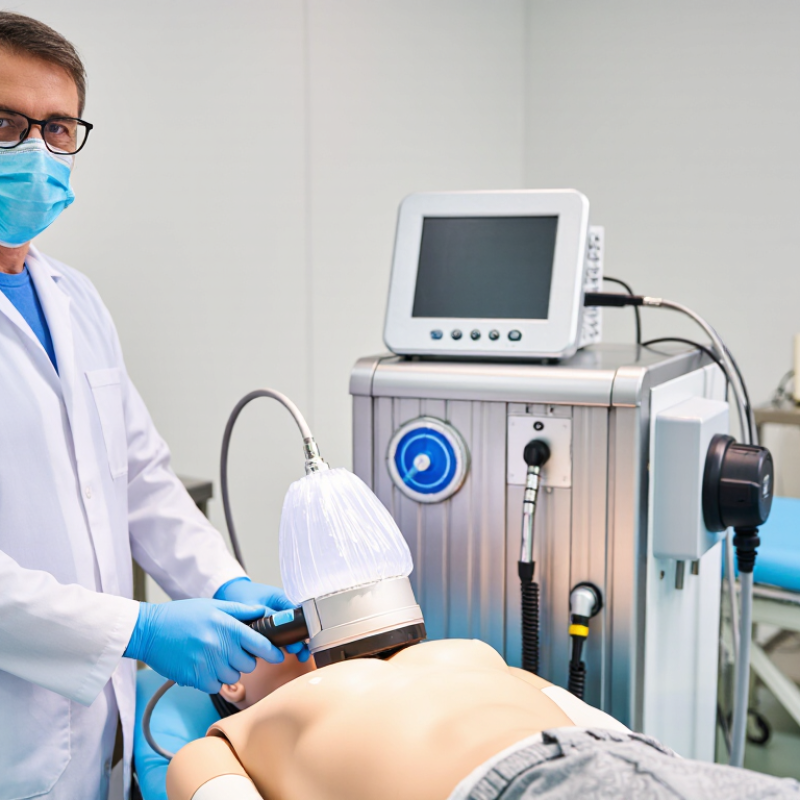
Top Ideal Temperature for Fat Freezing Machines?

The Cryolipolysis Principle: Fat Cells Cool Near −5°C to −11°C

Top Ideal Temperature for Fat Freezing Machines?

Cryolipolysis does not rely on one universal temperature. Fat cells are commonly cooled near −5°C to −11°C, while the surrounding skin remains protected through controlled contact and monitoring. The treatment zone should reach a stable cooling range. It should not simply become colder. That distinction matters.

The treatment zone should reach a stable cooling range. It should not simply become colder. That distinction matters.

A 2015 systematic review in Plastic and Reconstructive Surgery examined 19 clinical studies and reported approximately 20% fat-layer reduction after treatment. However, patient responses varied considerably. Treatment area, applicator fit, exposure time, and tissue thickness influenced the results. The number looks precise, perhaps too precise. Real bodies are less predictable than laboratory charts.

Experienced practitioners assess skin sensation, tissue shape, and visible changes during treatment. They also review medical history before selecting an energy level.

The −5°C to −11°C range describes the target cooling environment, not a guarantee of fat-cell destruction. The U.S. Food and Drug Administration has also highlighted the importance of appropriate patient selection and awareness of delayed complications, including uncommon increases in fatty tissue volume. Colder is not automatically better. A safe protocol balances thermal exposure, tissue protection, and measurable clinical goals. Celsius values alone cannot confirm treatment quality.

Clinical Target: Why −10°C to −11°C Is Common in FDA-Cleared Devices

Top Ideal Temperature for Fat Freezing Machines?

In FDA-cleared fat-freezing devices, controlled targets near −10°C to −11°C are common. This range supports selective cooling of subcutaneous fat while limiting exposure to surrounding tissue. FDA 510(k) summaries describe temperature monitoring, applicator contact, and automatic safety controls as essential design features. The displayed temperature is not always the temperature inside the fat layer.

Clinical research shows why precision matters. A peer-reviewed study in Lasers in Surgery and Medicine reported that controlled cooling can trigger adipocyte injury without surgical removal. Later clinical reviews commonly reported circumference reductions of approximately 2–4 cm after a treatment cycle, although results varied by body area and patient selection. Those numbers are useful, but not promises.

−11°C is not automatically better.

In practice, operators assess tissue thickness, skin sensitivity, contact pressure, and vacuum strength before treatment. A professional may reduce intensity when the skin feels unusually tight or pale. Device sensors should track temperature continuously, not only at startup. This detail is easy to overlook.

Some published studies use different cooling profiles, making direct comparisons difficult. That is a weakness worth acknowledging. The safest interpretation is that −10°C to −11°C represents a clinical operating target, not a universal prescription. Evidence should be checked against current FDA-cleared instructions, peer-reviewed safety data, and documented operator training.

Treatment Duration: How 35–75 Minutes Influences Cooling Outcomes

Top Ideal Temperature for Fat Freezing Machines?

Treatment Duration: How 35–75 Minutes Influences Cooling Outcomes

Treatment duration strongly affects how long tissue remains exposed to controlled cooling. A 35-minute session may suit smaller areas or newer applicator designs. Larger treatment zones often require 60 to 75 minutes. The ideal time depends on temperature stability, applicator contact, tissue thickness, and the treatment plan.

During a professional session, the operator should check skin response and device readings regularly. Cooling should feel intense at first, then become numb. Sharp pain, unusual burning, or excessive pressure needs immediate attention. Temperature alone does not determine the outcome. Poor contact can create uneven cooling, even during a long session.

Longer is not automatically better.

In my experience, rushed sessions can leave unclear results, while excessive treatment time may increase discomfort without adding value. That assumption needs careful review. Research supports controlled protocols, but individual responses still vary. A qualified provider should follow the machine’s tested settings and assess the person’s medical history before treatment. Skin tone, circulation, previous procedures, and the target area may influence the safe duration.

A 35-minute session may be practical, but it is not universally ideal. A 75-minute session may offer steadier exposure, yet it still requires monitoring. Accurate records help compare temperature, timing, sensations, and recovery across visits. Results develop gradually, not immediately after the applicator is removed.

Safety Control: Sensors Monitor Skin Temperatures Near 0°C

Top Ideal Temperature for Fat Freezing Machines?

Fat freezing devices do not use one universal “ideal” temperature. Settings depend on the applicator, treatment area, tissue thickness, and approved clinical protocol. The skin surface may approach 0°C during treatment, while the underlying tissue experiences a different thermal environment. This difference matters. A colder setting is not automatically safer or more effective.

Reliable systems use sensors to monitor skin temperature continuously. These sensors can detect unexpected cooling, poor contact, or changes caused by movement. If the temperature falls outside the programmed safety range, the device may reduce energy or pause treatment. A trained professional should check the skin before, during, and after each cycle. Visible redness can be normal, but intense pain, unusual whitening, or persistent numbness requires immediate attention. Sensor readings are valuable, yet they are not perfect. Calibration, placement, and equipment maintenance can affect accuracy.

Tips: Ask how the device measures skin temperature and how often its sensors are calibrated. Confirm that the treatment follows a documented protocol for your body area. Keep the skin clean and still during the session. Report sharp pain early, even if the screen shows a normal reading. Comfort alone does not prove safety, and a low temperature alone does not guarantee results.

Top Ideal Temperature for Fat Freezing Machines?

Safety Control: Sensors Monitor Skin Temperatures Near 0°C

During cryolipolysis, applicator cooling may lower the monitored skin surface toward approximately 0–5°C. The representative sensor profile shows rapid cooling followed by stabilization near 0°C. Actual temperature targets vary by applicator design, protective membrane, treatment area, and clinical protocol.

Temperature values are representative safety-monitoring readings in degrees Celsius, not a universal clinical limit.

Device Selection: Match Cooling Temperature, Vacuum, and Applicator Design

Top Ideal Temperature for Fat Freezing Machines?

There is no universal ideal temperature for every fat freezing machine. In practice, safe treatment depends on controlled cooling, not the lowest displayed number. Many systems operate near validated applicator ranges around -5°C to -10°C, but tissue temperature varies. Skin thickness, blood flow, and applicator contact can change the result. A trained provider should follow clinical protocols, monitor the skin, and document settings for each session. Colder is not automatically better.

Device selection should match cooling temperature with vacuum strength and applicator design. Strong vacuum may improve tissue capture, yet excessive suction can increase bruising and discomfort. A smaller applicator may suit a limited fold, while a curved applicator can improve contact on the abdomen or flank. Check whether the cooling plates sit evenly against the skin. Gaps can reduce energy transfer and create uneven exposure. Ask for temperature sensors, automatic shutoff features, and maintenance records. These details show engineering discipline, not marketing language.

Tips: Measure the treatment area before choosing an applicator. Confirm the actual cooling range, vacuum setting, and contact time. Protect the skin with the specified membrane or gel pad. Never judge performance by cold sensation alone. Review comfort, redness, and recovery during follow-up. A colder setting can look impressive, but that logic is incomplete. A precise setting can still be wrong for the person in front of you.

Top Ideal Temperature for Fat Freezing Machines? - Device Selection: Match Cooling Temperature, Vacuum, and Applicator Design

Treatment Area / Use Case Typical Cooling-Plate Setpoint* Typical Negative Pressure Range* Recommended Applicator Design Common Treatment Duration Selection Considerations
Lower abdomen Approximately −5 to −10 °C Approximately 20–60 kPa below ambient pressure Medium-to-large curved cup with balanced cooling on both sides About 35–60 minutes Choose a cup that captures the fold without excessive compression; temperature control and skin sensors are important for consistent exposure.
Flanks / love handles Approximately −5 to −10 °C Approximately 20–50 kPa below ambient pressure Asymmetric or contoured applicator with lateral support About 35–60 minutes A contoured opening can improve tissue capture and reduce edge gaps on sloped anatomy.
Upper abdomen Approximately −5 to −9 °C Approximately 20–50 kPa below ambient pressure Medium curved applicator with adjustable vacuum control About 35–60 minutes Use moderate suction when tissue is thin or near bony margins; avoid selecting a large cup that cannot maintain full contact.
Inner or outer thighs Approximately −3 to −8 °C Approximately 15–45 kPa below ambient pressure Small, narrow, or strap-assisted applicator About 35–60 minutes Smaller contact surfaces generally conform better; use lower suction if the treatment area is close to the knee or groin.
Submental area Approximately −2 to −6 °C Approximately 10–35 kPa below ambient pressure Small, shallow, flexible applicator with precise edge control About 35–60 minutes Prioritize gentle vacuum, stable contact, and anatomical fit because the tissue layer is usually thinner and more sensitive.
Small or fibrous bulges Approximately −3 to −8 °C Approximately 15–45 kPa below ambient pressure Compact applicator with independent temperature and vacuum adjustment About 35–60 minutes Independent controls help compensate for inconsistent tissue thickness and reduce the need to over-tighten suction.
Technical note: The values above are representative engineering ranges for non-invasive cryolipolysis-style systems, not universal treatment prescriptions. Actual tissue temperature depends on cooling-plate temperature, heat extraction capacity, applicator contact, tissue thickness, vacuum level, ambient conditions, and treatment protocol. Cooling surfaces should be used with an appropriate protective membrane, continuous temperature monitoring, automatic over-temperature protection, and the device manufacturer's validated instructions for use.

FAQS

What temperature range is commonly used for cryolipolysis?

Fat tissue is often cooled near −5°C to −11°C. Colder is not automatically better. The target range supports controlled exposure, not guaranteed fat destruction.

Does a lower temperature always produce better results?

No. The treatment must balance cooling, skin protection, and tissue response. Excessive cooling may increase discomfort or risk. Temperature numbers alone cannot confirm quality.

How long does a typical fat-freezing session last?

Sessions commonly last 35 to 75 minutes. Smaller areas may need about 35 minutes. Larger zones may require 60 to 75 minutes. Longer is not automatically better.

What affects the ideal treatment duration?

Applicator contact, tissue thickness, treatment area, and temperature stability all matter. Previous procedures and circulation may also influence the plan. The timing should follow a documented protocol.

What sensations are normal during treatment?

Cooling may feel intense at first, followed by numbness. Mild redness can occur afterward. Sharp pain, burning, or unusual pressure needs immediate attention.

How do sensors improve treatment safety?

Sensors continuously monitor skin temperature during the cooling cycle. They may detect poor contact or unexpected cooling. Some systems reduce energy or pause automatically.

Can the skin surface and deeper tissue have different temperatures?

Yes. The skin surface may approach 0°C, while deeper tissue experiences another thermal environment. This difference is important. One screen reading cannot describe every tissue layer.

When should someone question the treatment process?

Ask how sensors are calibrated and how readings are recorded. Report sharp pain early, even when the display appears normal. Persistent numbness, intense pain, or unusual whitening deserves professional review. I might underestimate this point. Careful follow-up still matters.

Conclusion

The ideal temperature for fat freezing machines is determined by how effectively controlled cooling can affect fat cells while protecting the skin and surrounding tissue. During cryolipolysis, fat cells may be exposed to temperatures near −5°C to −11°C, with approximately −10°C to −11°C commonly used as a clinical target in many cleared devices. However, temperature alone does not determine treatment quality. The key question, “what is the ideal temperature for fat freezing machines to work,” should be considered alongside treatment duration, applicator design, and cooling consistency.

Sessions typically last about 35–75 minutes, allowing sufficient time for controlled cooling to influence the targeted area. Built-in sensors should continuously monitor skin temperatures, keeping the surface near 0°C and helping reduce the risk of excessive exposure. When choosing a machine, users should evaluate its temperature control, vacuum strength, sensor accuracy, and applicator fit. A balanced combination of these features supports more consistent, comfortable, and carefully managed treatments.

Aria

Aria

Aria is a dedicated marketing professional with a deep passion for innovative strategies and a keen understanding of our company's product offerings. With a wealth of experience in the industry, Aria excels at crafting engaging content that highlights the unique features and benefits of our......